

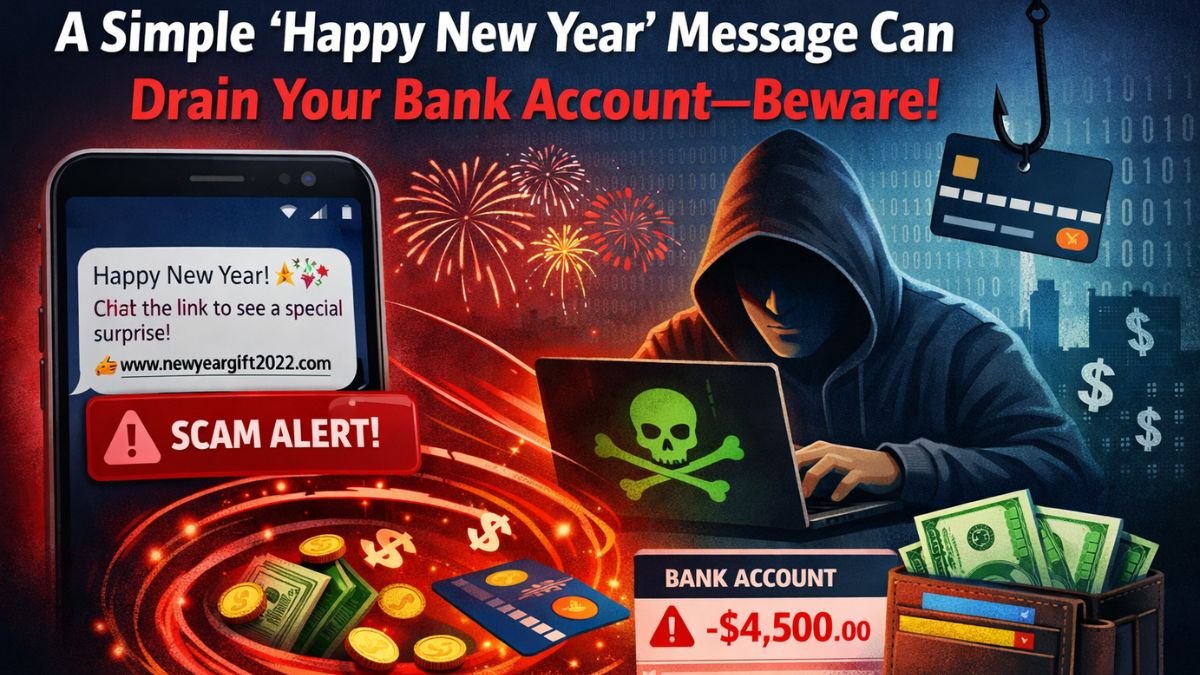
At the start of the New Year, our phones are overloaded with positive wishes, WhatsApp messages, discounts, and compliments. On the one hand, most of them are spreading positivity, but some apparently innocent messages about Happy New Year may become a nightmare in terms of finances. The scam of sending festive greetings is becoming common by cyber criminals who end up scamming unaware users and emptying their bank accounts.
Yes, a mere happy New Year message can make you spend your hard-earned money–unless you are keen.
The New Year Scam: How it Works.
During the holiday season, the scammers exploit the fact that people are in a jovial mood and not very alert. These fraudsters use SMS messages, WhatsApp, email, or social media and make them give an impression of authenticity on the face of it. The message may say:
- “Happy New Year! Click here to claim your gift”
- International Bank New Year Reward–check now.
- “You’ve won a New Year cashback”
- Get New Year Greeting Card downloads.
After clicking on the link, you are redirected to a counterfeit site which appears to be the portal of your bank, UPI app, courier service or any popular e-commerce site. Once you give them your personal information, UPI PIN, OTP, or card information, fraudsters access your account.
To some extent, the connection places a malware on your phone that can enable the criminal to monitor the keystroke or message, or even take control of your gadget.
Why New Years Scam Is so Good?
New Year scams are successful since they exploit human emotions. Individuals are thrilled, distracted and inclined to believe messages which seem to include greetings, gifts or rewards. Cyberspace criminals can also cause urgency with words such as limited time, offer is expires today or check now.
Also, the fraudsters tend to parody the official logos, names, and customer care numbers thus, creating the impression of the authenticity of the message. A large number of users do not even bother to look twice at the source and get into the trap in a few seconds.
Typical New Year Frauds in cyber space.
1. Fake Gift & Lottery Messages
Swindlers tell you you have won a prize, cash prize or luxury item during the New Year. In order to get it, you are required to click a button or pay a small processing fee.
2. Bank & UPI Fraud Messages
Messages which appear to have been sent by banks, or UPI applications, request you to update KYC or check your account because of security changes during the New Year.
3. WhatsApp & SMS Links
Even the simplest of greeting messages such as a link such as See your New Year surprise can infect your phone with spyware or malware.
4. Fake E-commerce Offers
The phishing websites are promoted by fraudsters using fake links to their New Year sale, which have improbable discounts.
Real-Life Effect: Money Gone in Seconds.
As soon as fraudsters have access to your personal data, they can take all the money out of your bank account within minutes. In most cases, the victim learns about the fraud when he or she obtains the debit alert or when his or her UPI balance is at zero. The process of recovering is hard, tedious and time consuming and it is not assured of refund.
The Question of How to Protect Yourself against New Year Scams.
To be safe, one does not need to have some deep technical expertise in this regard, he or she only has to be aware of it and be cautious.
- Do not open links which are unknown even with greetings or offers.
- Do not provide any OTPs, UPI PINs or card information to anyone- the banks never require it.
- Cross-examine the sender of any financial message.
- Do not download any files or greeting cards found by WhatsApp or SMS.
- Implement multi-factor authentication on finance and payment applications.
- Use apps available in the official application stores such as Google Play or Apple App Store.
- Always upgrade your phone security and applications.
What to Do If You’re Scammed?
In case of fraud suspicion or in case of unauthorized transactions:
- Block your bank card or UPI immediately using your bank app.
- Dial the number of the official customer care of your bank.
- Report the cybercrime in the portal of cybercrime (cybercrime.gov.in).
- Complaint should be made to your local police station in case it is necessary.
There are cases when timely response may save additional losses.
Final Thoughts
A fresh start should be happy, hopeful, and with new aims not monetary pressure. Although it is a wonderful way to make people become friendly, blind faith is a risk in the digital era.
Always keep in mind that no real bank, company, or organization will ever request your personal or financial information in a message of a happy new year. Being a minute or two awake will cost you months of regret.
Smartly celebrate this New Year, not an empty bank account with a Happy New Year message. Stay alert, stay safe.
Read More: How to De-stress using straightforward AI devices: Smart Ways to Relax in a Digital World.
Youtube: https://youtube.com/@IBN24NewsNetwork?si=ofbILODmUt20-zC3
Instagram: https://www.instagram.com/ibn24newsnetwork
Facebook: https://www.facebook.com/ibn24newsnetwork/
Twitter: https://x.com/IBN24Network?t=K1A8JK8CUwcgllMRYQNPOw&s=08