

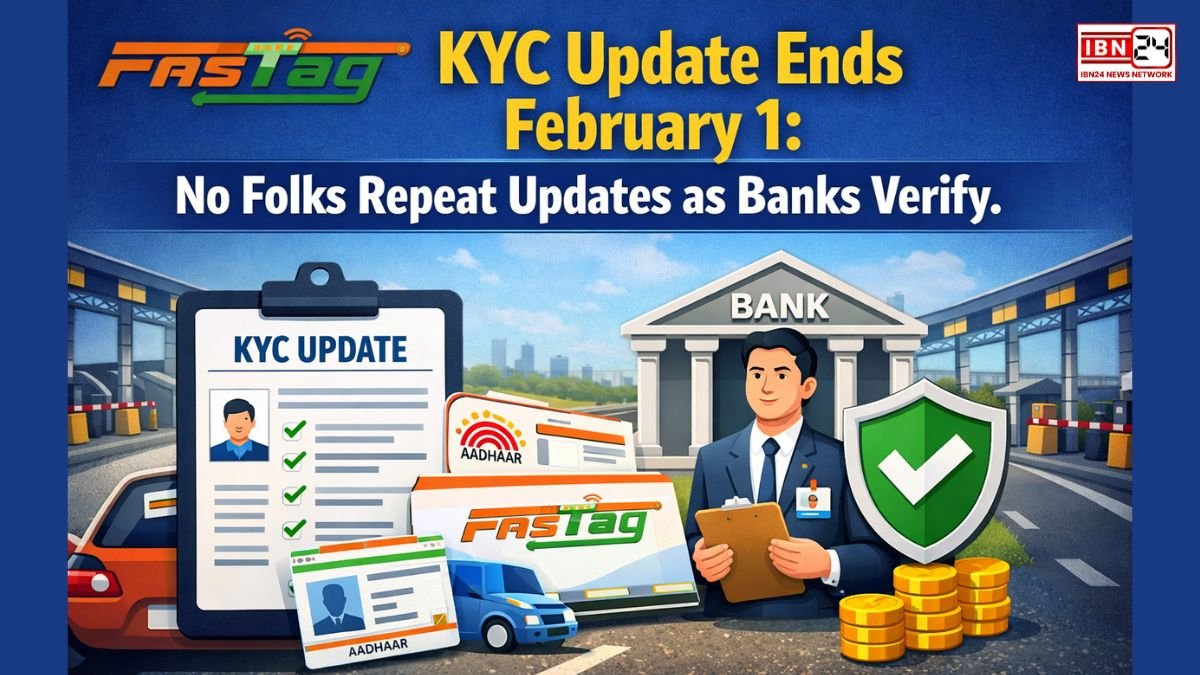
Since February 1, 2026, there will be a significant shift in the FASTag system that will alleviate the millions of vehicle owners in India. The old practice of having to undergo repeated KYC/KYV verification which has often been annoying to the user after FASTag issuance is now being streamlined. This change, which was posted by the National Highways Authority of India (NHAI), has put an end to the normal Know Your Vehicle (KYV) or KYC procedures of new FASTags issued on cars, jeeps, and vans. In the future, banks will assume complete responsibility in terms of verification on the first hand, therefore, avoiding unnecessary follow-ups on the user.
Why This Change Matters
Since its introduction, FASTag RFID-based toll collecting device has transformed the highway travel in India since it has made it possible to pay the tolls electronically without having to stop the plazas. But as time went by, the KYC/KYV process, which was intended to make sure that FASTags are properly attached to vehicles, turned out to be inconveniencing to most of the users. Users were also quizzed to provide additional documentation or even photographs of the vehicle even weeks after purchase and they were required to buy a tag. These recurrent verifications as prompts caused time wastage, misunderstanding and two steps forward and two steps backward with issuing banks.
This is the solution that the government has come up with. From February 1, 2026 onwards:
- The requirement to undergo the KYV/KYC process after the activation of the FASTag to new cars and jeeps and vans will not be a mandatory procedure anymore.
- Rather, the process of vehicle verification will occur prior to implementation of activation and issuers (who are usually banks) will do it through formal vehicle records.
- This change implies that the motorists will not have to constantly upload documents or answer the verification inquiries once they have purchased a FASTag.
Banks are now in complete charge of verification.
Following the updated structure that NHAI has proposed, the importance of the bank in the issuance process of FASTag will be central and decisive. The new regulations stipulate that the banks must fulfill all the verification procedures such as vehicle verification to enable the FASTag. This is a huge departure of the previous method whereby banks could enable the tag now, and check later.
In order to enable this, banks will now:
- Confirm the vehicle information by checking the VAHAN database It is a trusted central database of vehicle registration information which is managed by the government.
- Check Registration Certificate (RC) should be used to verify the information of a vehicle whenever there is no information provided in VAHAN at all bearing full responsibility.
Such a pre-activation verification model does not require any post-activation KYV/KYC verification which resulted in numerous follow-ups and delays in the previous times. It also makes FASTag ecosystem secure and compliant enough with less complaints to users and toll operators.
What It Implies to the Current FASTag Consumers.
The current FASTag holders will not be requested to re-perform KYC/KYV in a rush only due to this change. As per the amended regulations:
- Regular KYV inspections will also not have to be performed even on the already issued tags.
- Checking will occur only in case of a particular complaint like suspected misuse, wrong issuance or errors like a loose tag on the car.
- Without this kind of complaints, users are allowed to use FASTag as usual without having to repeat document submission and uploading.
This implies that current users are relieved of constant reminders and the option of deactivation of the product simply because of technicalities in authentication. The reform will ensure that the usage of FASTag is as convenient and easy as possible.
Benefits of the New System
The change should provide a number of key benefits:
1. Hassle-Free Experience
The drivers will not receive the same notifications repeatedly and have to be followed up to update KYC or vehicle information once the tag has been issued. This will alleviate stress on the users and will cut down the number of trips to a bank branch or the time wasting uploads on apps.
2. Faster Activation
The new FASTags ought to work quicker and with less mistakes since the process of verifying vehicles is now carried out at the bank prior to activation. New users have the advantage of faster communication since the back-and-forth communication can be eliminated.
3. Reduced Complaints
With the responsibility being handed over to the banks and the probability of mistakes or mismatches being prevented, with the help of verified VAHAN records. This will result in reducing conflicts or complains by users at toll plazas.
Conclusion
The FASTag was to facilitate easy highway travel and quicker payments on the toll. Although its ultimate purpose has been fulfilled, the middle obstacles of KYC/KYV checks proved to be a thorn in the side of various vehicle owners as time passed. As the NHAI streamlines the verification process, and the banks become the ones involved in verifying the details of the vehicle prior to its activation, the users will have a better experience of being hassle-free and relaxed.
Since the 2 nd of February, 2026, say goodbye to the frequent FASTag KYC notifications – and welcome to a more convenient and customer friendly tolling system.
Read More: How to De-stress using straightforward AI devices: Smart Ways to Relax in a Digital World.
Youtube: https://youtube.com/@IBN24NewsNetwork?si=ofbILODmUt20-zC3
Instagram: https://www.instagram.com/ibn24newsnetwork
Facebook: https://www.facebook.com/ibn24newsnetwork/
Twitter: https://x.com/IBN24Network?t=K1A8JK8CUwcgllMRYQNPOw&s=08