

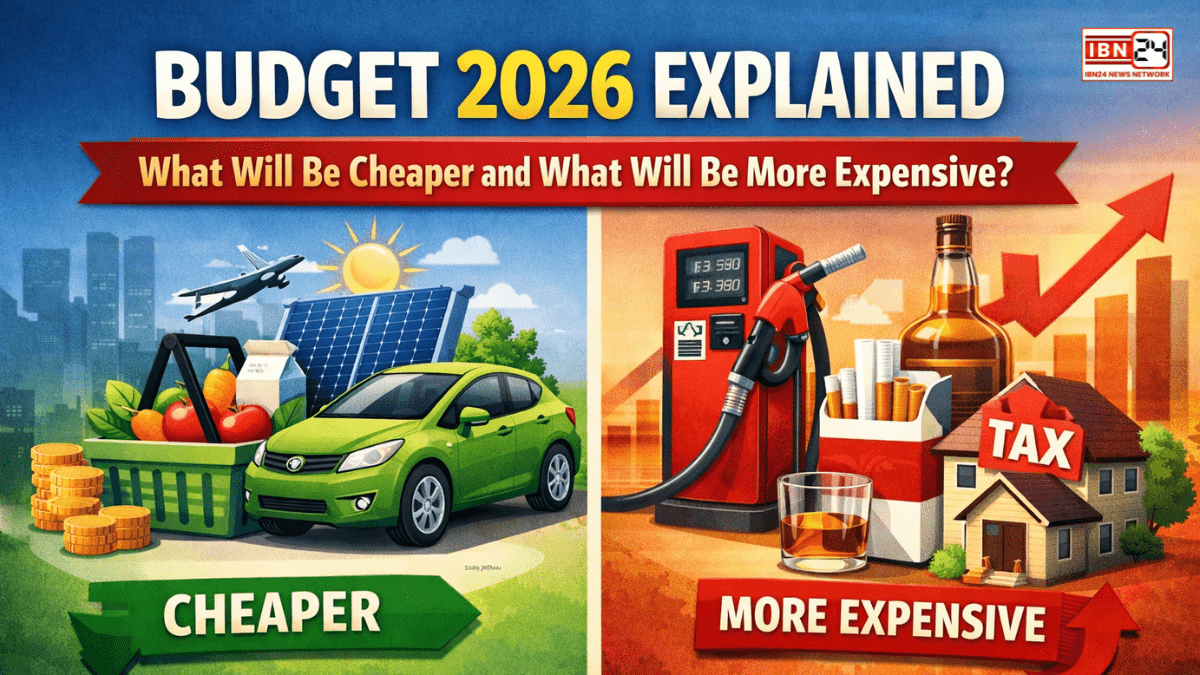
Any household, business, investor, or student around every Indian household, looking keenly at the Union Budget 202627 because, other than headlines, it will directly affect your wallet. The budget of this year aimed at helping to promote economic growth, power manufacturing, and rationalize taxes and keep fiscal discipline. However, one of the most discussed sections does not go away: what will be cheaper and what will be more expensive to you and your family in the real life.
We will simplify it down into simple practical terms.
Green numero 3 — Consumer and industry relief.
1. Expenses on Travel and Education abroad Reduced.
To the globetrotting Indians, the news is good. The source based tax (TCS) imposed on foreign tour packages has been reduced dramatically, in terms of percentage, the tax is charged at different rates between 5-20 percent but this time it will be a flat charge of 2 percent. This renders the international holidays cheaper. On the same note, the TCS of education remittances through the liberalised remittance scheme (LRS) is lower and thus reduces the initial cost of students and parents financing foreign education.
2. Goods that are imported become cheaper.
Among the most concrete consumer gains must be identified the decline of the custom duty on personal imported goods down to 10 percent instead of 20 percent. This 50 percent reduction can significantly reduce the costs by the time you receive your gadgets, accessories, or even your present when you are overseas.
3. Medical Bills are lowered on life-threatening treatments.
The budget has provided basic custom duty exemptions on 17 standard drugs that treat cancer and additional exemptions on drugs which treat rare illnesses. This implies that life saving therapies and life saving drugs will also be cheaper, and that will be a great relief to patients and families that have struggled with chronic health conditions.
4. Electronics and Appliances Realize Cost Advantages.
Exemptions of duties are also extended to the components of solar panels and clean-energy equipment manufacturing as well as parts of microwave ovens. This may reduce the cost of retailing these products and help in the increased use of energy-efficient technologies.
5. Exports and manufacturing receive tax assistance.
In the case of industry, various duty reductions on inputs such as aircraft components to capital goods required in the production of critical minerals are meant to stimulate domestic production and exports. This is not only reducing the cost of production but it also enables the Indian manufacturers to compete with the rest of the world.
🔴 What gets more expensive 2 More Tax, Fees, and Stricter Compliance.
1. Raised Trading Costs of Stock Markets.
The reason investors and traders should be worried is that the Securities Transaction Tax (STT) on futures and options trading has been raised. To take an instance, STT futures have leaped up by 0.02 to 0.05 rendering speculative trading not only costly but lowering the frequency of trading gainfulness. This has already spilled over to the market feeling.
2. There is Increased Levies on Alcohol, Tobacco and Sin Goods.
The budget has increased the indirect taxes on a number of sin goods. The TCS on alcoholic beverages was raised and the duties levied on tobacco products such as cigarettes and pan masala increased very high. These tax increases are aimed at generating more revenue as well as reducing the consumption of harmful products.
3. Luxury and Imported Items are possible to be more expensive.
Although there are cheaper personal imports, some luxury products, such as the expensive watches and the best devices, are more expensive because of the increased duty levels or elimination of exemptions. This is indicative of the pressure by the government to ensure that it safeguards local producers and biases in favor of the local productions.
4. Changes in Equipment and Tech Imports Duty.
Budget 2026 repealed duty exemption of coffee roasting and brewing and vending machines. This increases the cost of imported coffee equipment a blow to cafes and other businesses which invest in coffee equipment. Similarly, there is increased levy on some of the specialized telecom and broadcasting equipment imports, which may raise the costs of the service providers.
5. Improved Fines and Conformational Price.
Tightening of rules regarding tax compliance was also in the budget. Now, misreporting about income and non disclosed assets qualify more serious punishment and they are required to make payments in excess of the tax owed. This helps to strengthen the observance of strict compliance but also increases the possible expenses of taxpayers that violate the rules.
📊 Final Takeaway
The 2026 budget is a patchwork of consumer relief and tightening the belt. The reduced cost of travelling, decreasing importation tax, decreased medical expenses, and manufacture incentives are compensated by increasing trading cost, sin tax, and more demanding compliance expenses.
Such a mix is an indicator of how the government tries to promote growth but at the same time maintain the fiscal house in good order, in other words, helping households and businesses that are in need of rescue but at the same time tightening the areas where excessive or speculative behavior exists.
To the majority of common Indians, the actual effect will manifest itself in household spending, investment, and consumption decisions in the next year, the new definition of living, investing, and spending in 2026.
Youtube: https://youtube.com/@IBN24NewsNetwork?si=ofbILODmUt20-zC3
Instagram: https://www.instagram.com/ibn24newsnetwork
Facebook: https://www.facebook.com/ibn24newsnetwork/
Twitter: https://x.com/IBN24Network?t=K1A8JK8CUwcgllMRYQNPOw&s=08