

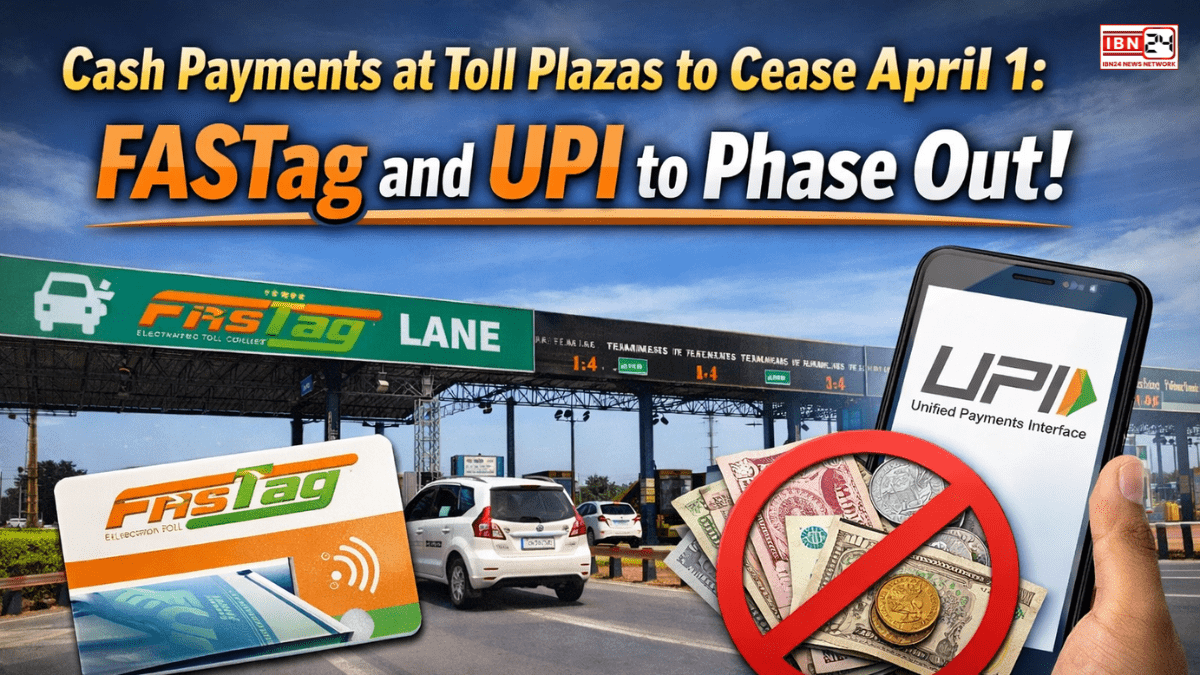
Since April 1, 2026 India is going to start a new wave of digital tolling since the process of payment at the toll plazas in cash will be eliminated in the country. The National Highways Authority of India (NHAI) with the support of the Ministry of Road Transport and Highways is also considering transferring all the tolls collections in the National Highways and Expressways to an entirely digital payment system – mainly by FASTag and the Unified Payments Interface (UPI). The aim of this historic change is to modernise road travel, make road travel more efficient, lessen congestion, and speed up the process of cashless economy of India in the long run.
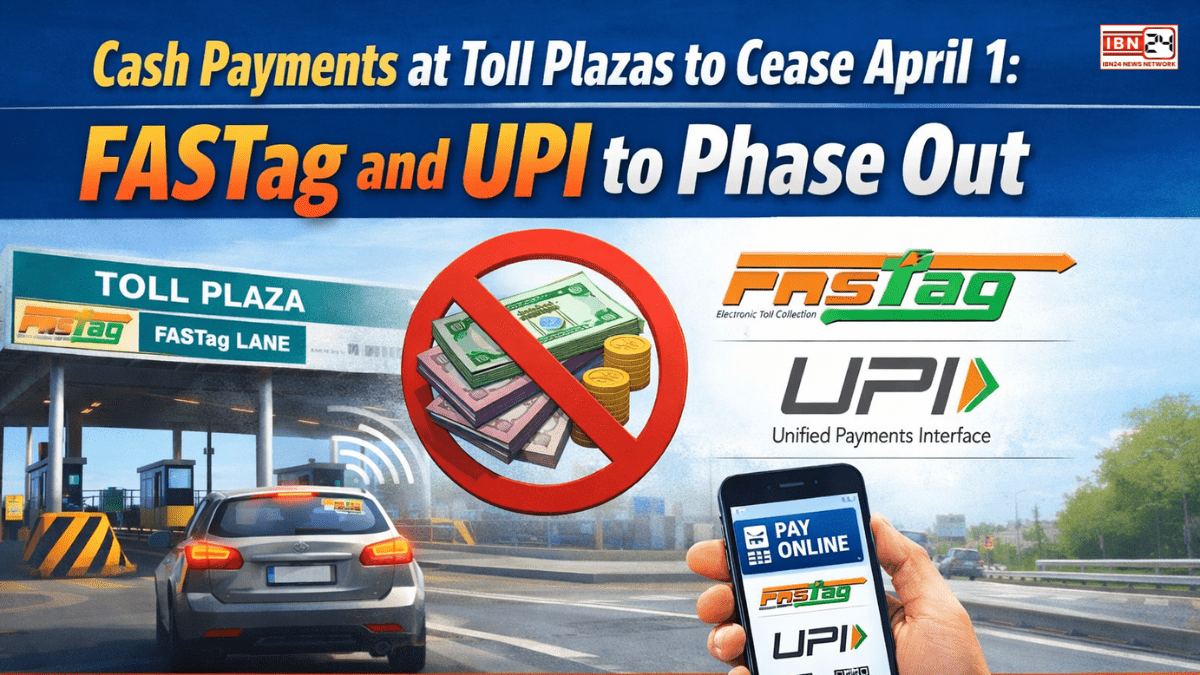
Why Is This Change Happening?
Millions of vehicles are utilised by the highway in India on a daily basis and the toll plazas have long posed as bottlenecks because of the cash transactions. Such transactions reduce the speed of traffic and cause a longer waiting period particularly during the peak periods. The suggestion of NHAI of doing away with cash is aimed at:
- Lower the congestion in toll plazas.
- Enhance commuter travel.
- Make sure it has smooth and non-contact payments.
- Increase the transparency and accountability of collections on tolls.
- Reduce operational impediments related to cash management, counting and reconciliation.
It is also a government-wide effort to further enhance the adoption of digital payments in the industries, which can be seen as an extension of its Digital India mission.
FASTag and UPI: What They Are
FASTag is an RFID toll payment system which enables motorist to pay toll fees automatically when they pass through toll plazas. It charges the account that is linked to the bank or wallet without drivers stopping and giving cash. FASTag is not a new system as it has been in place over the years and has already penetrated the tolling system.
UPI is the real-time peer-to-peer payment system that is highly utilized to conduct daily digital payments in India. At the toll plazas that enable UPI, motorists will be able to scan a QR code and pay within a few seconds using their bank application or other wallets compatible with UPI.
These two mechanisms will also be the standard forms of paying tolls as per the proposed rule in April, 1.
The extent of the spread of digital tolling is already high.
The digital transformation has been slow but high. Recent statistics show that more than 98 percent of the tolls are already being made through FASTag and other electronic methods, with an insignificant percentage being carried out in cash or hybrid form. This exhaustive adoption is an indication that motorists and the road are mainly prepared to make a total transition to digital-only tolling.
Prior to this change being proposed, vehicles that did not use FASTag were already paying twice as much in toll fee when they opted to use cash a purposeful strategy to push to digital. In the meantime, UPI payments attract a somewhat higher fee, usually of approximately 1.25 × the common toll rate, which is an incentive to use FASTag but continues to push users out of cash.
What it Implicates on Motorists.
The cashless payment will be implemented starting April 1 at national toll plazas. Motorists will need to:
- Install and attach a legit FASTag to their car, preferably to an accounted wallet or bank account.
- Make payments using UPI in the absence of FASTag.
- Before travelling, make sure the FASTag or UPI account of the personnel is properly balanced.
The shift may necessitate a change of habit by a low percentage of motorists who still use cash. But in the case of wallets, bank applications and FASTags are readily accessible in the whole of India, the process is likely to be workable to the majority. Some vehicles are now being fitted with FASTags when they are sold or can readily acquire them by the banks, post offices or through authorised agents.
More than Only Digital Payments.
The benefits of switching to an all-digital toll system are not limited to the substitution of cash:
- Increased Speed: Vehicles do not have to stop at the toll plazas, and it increases traffic.
- Less Fuel Consumption: The waiting time is also decreased and this means reduced fuel consumption and emissions.
- Enhanced Traffic Control: Digital documents will avail real-time information that can enable the authorities to evaluate and control highway traffic patterns.
- Higher Accountability: Online transactions will create an audit trail, which will curb leakages and discrepancies in toll collection.
Challenges and Road Ahead
Although most of the commuters have already adopted digital ways, a minor portion still relies on cash payments either because of a habit or due to the inability to use digital means. To make sure that this transition goes smoothly and that it is inclusive will involve further outreach, education, and potentially assistive measures – including roadside support and customer-help mechanisms.
In addition, the issue of connectivity and technical glitches, particularly in isolated locations, should be addressed prior to this shift in order to eliminate inconveniences.
Conclusion
This resolution to cancel cash toll payments since April 1 will be a major breakthrough in the Indian transportation and digital payment framework. The requirement to use FASTag and UPI payments in all of the toll plazas on the National Highways is helping India to move to modern, efficient, and transparent systems that will benefit commuters, as well as authorities and the economy overall. With this transition, digital preparedness and literacy will become one of the main factors in ensuring that the highways of India are not only cashless, but also faster and smarter.
Youtube: https://youtube.com/@IBN24NewsNetwork?si=ofbILODmUt20-zC3
Instagram: https://www.instagram.com/ibn24newsnetwork
Facebook: https://www.facebook.com/ibn24newsnetwork/
Twitter: https://x.com/IBN24Network?t=K1A8JK8CUwcgllMRYQNPOw&s=08