


IBN24 News Network, Special Report (Kajal Panchal)
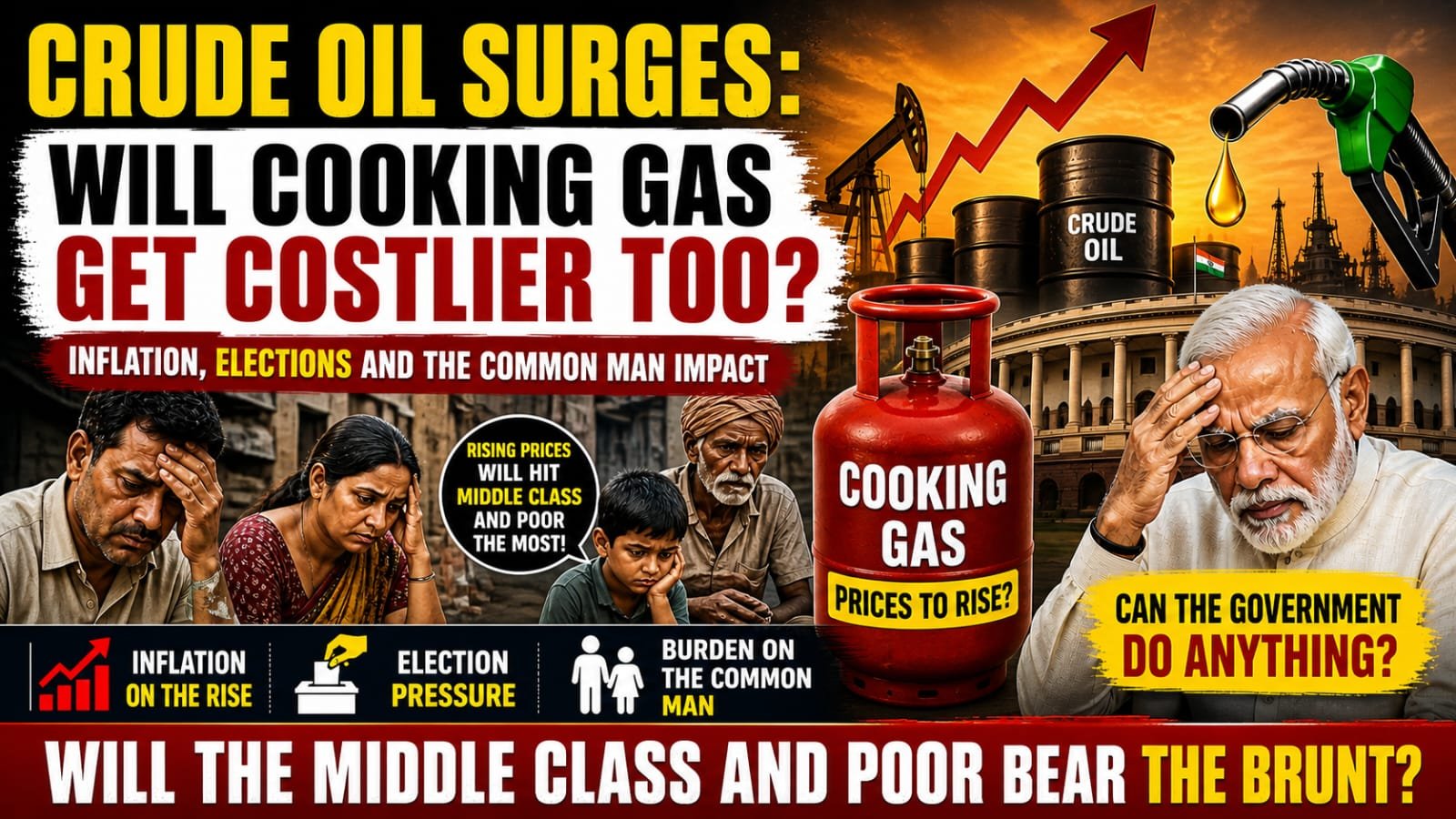
Rising crude oil prices in the global market have once again raised concerns over fuel inflation in India. After petrol and diesel, the focus has now shifted to an important question- will domestic cooking gas (LPG) also become more expensive in the coming days?
Inflation, Elections and Impact on the Common Man
Recent hikes in commercial LPG cylinder prices have already triggered alarm signals, indicating that domestic LPG prices could also come under pressure if global trends continue.
Why Crude Oil Prices Are Rising
Crude oil prices are rising due to multiple global factors. Geopolitical tensions in key oil-producing regions, especially the Middle East, are affecting supply stability. Along with this, production cuts by OPEC+ countries, rising global demand, and a strengthening US dollar are pushing prices higher.
These factors directly impact oil-importing countries like India, increasing fuel cost pressure.
Will Petrol and Diesel Prices Go Up?
Experts believe that if crude oil remains in the range of 110 to 120 dollars per barrel, petrol and diesel prices could rise by 10 to 30 rupees per litre. However, actual price changes may depend on government intervention and the political situation.
Elections and Price Control Strategy
During election periods, governments generally avoid sharp fuel price hikes. This is managed through tax adjustments, subsidies, or by allowing oil companies to absorb short-term losses.
This helps reduce the immediate impact of global crude oil fluctuations on the public.
Will Domestic LPG Also Become Costlier?
The recent increase in commercial LPG cylinder prices is being seen as an early indicator. In most cases, commercial rates rise first, followed by domestic LPG adjustments.
If global crude oil prices remain high for a longer period, maintaining LPG subsidies could become difficult, increasing the chances of domestic price hikes.
Impact if LPG Prices Rise
If domestic cooking gas becomes expensive, the impact will be felt across households.
Household budgets will face pressure as cooking costs increase and monthly expenses rise. The middle class will experience higher financial stress due to rising fuel costs along with existing EMIs and daily expenses.
For lower-income groups, even refilling cylinders may become difficult, which could force some families to return to traditional fuels such as firewood or coal, affecting health and living standards.
Risk of Double Inflation
If petrol, diesel, and LPG prices rise together, the economy may experience a double inflation effect. Transport costs will increase, making goods more expensive. At the same time, higher cooking fuel costs will raise household expenses, adding further pressure on inflation.
Government Response Options
The government may respond by increasing LPG subsidies, reducing taxes, or diversifying crude oil imports. However, such measures could increase fiscal burden and widen the budget deficit.
What Lies Ahead
If crude oil prices remain high, there is a strong possibility that petrol, diesel, and LPG prices may all increase. If global conditions improve, some relief may also be possible. The rise in crude oil prices is no longer limited to fuel stations. Its impact may soon reach household kitchens. If the trend continues, LPG prices could also rise, increasing pressure on middle-class and low-income families and accelerating overall inflation.
The coming months will be crucial in deciding whether global oil pressure turns into a broader domestic price shock.
Read More: SSC Jobs 2026: 3003 Government Vacancies Announced – Apply Now!
Youtube: https://youtube.com/@IBN24NewsNetwork?si=ofbILODmUt20-zC3
Instagram: https://www.instagram.com/ibn24newsnetwork
Facebook: https://www.facebook.com/ibn24newsnetwork/
Twitter: https://x.com/IBN24Network?t=K1A8JK8CUwcgllMRYQNPOw&s=08